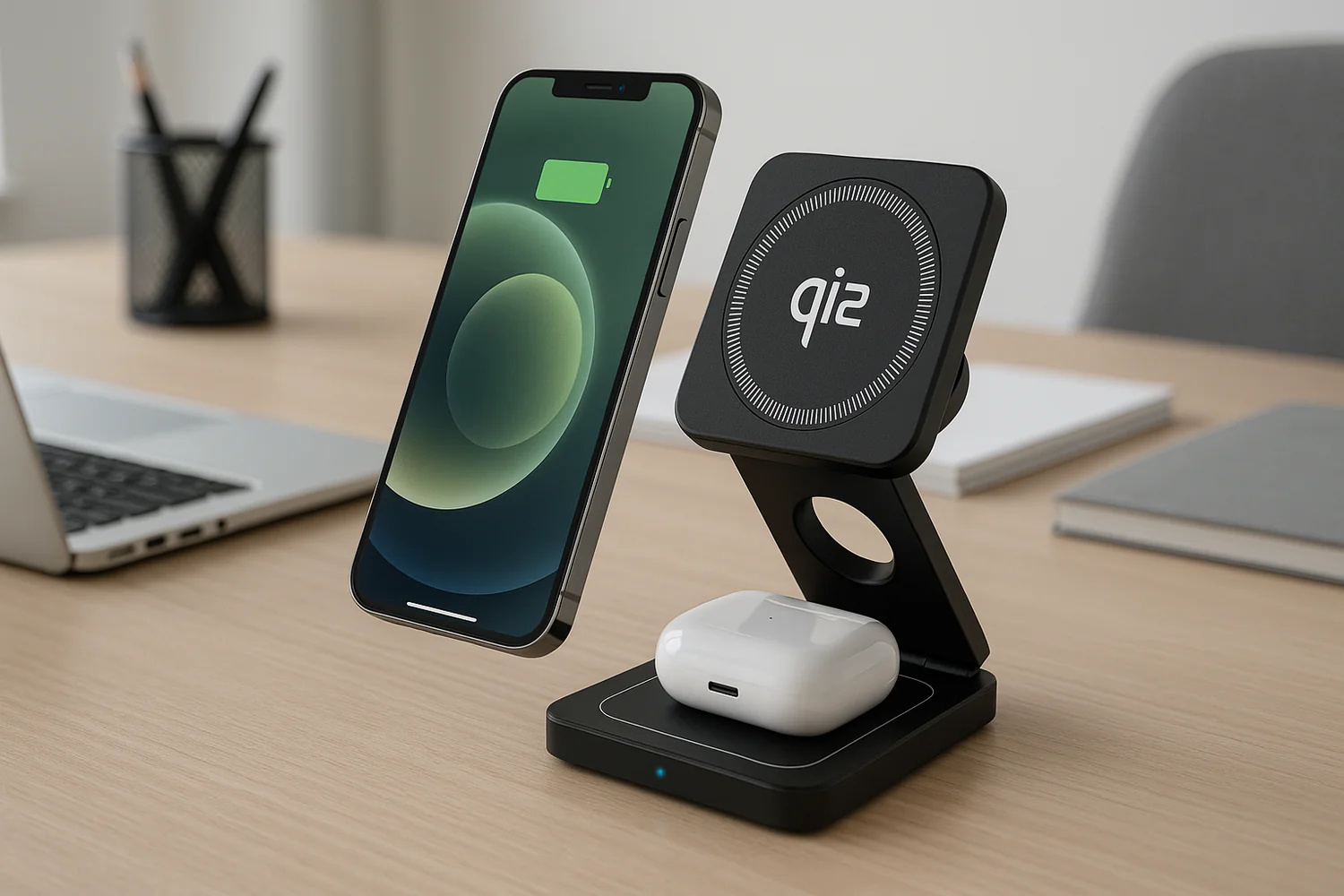
Charging myths are everywhere, especially on social media. Most of them sound convincing because charging is invisible. You cannot see power negotiation, heat buildup, or battery protection features working in the background.
If you want the full science-backed breakdown with trusted sources, read this first:
The Geek Blog: Charging Myths vs Facts
This WordPress post is the practical, evergreen version. It summarizes the myths people repeat and gives clear, safe charging habits you can follow immediately.
Why These Myths Keep Coming Back
Charging myths persist for three reasons.
1) Old advice gets recycled.
Battery guidance from years ago still gets repeated, even though devices and standards changed.
2) “Ports and watts” are easy to misunderstand.
People assume higher wattage forces power into a phone. Modern USB-C Power Delivery does not work that way.
3) Heat is misunderstood.
Most battery wear people blame on “fast charging” is actually caused by heat and poor accessories.
The 7 Charging Myths People Still Believe
Each section below is intentionally short. The full detailed explanations live in the Geek Blog guide.
Myth 1: Fast charging damages your battery
Modern devices are designed to charge quickly and safely when you use certified chargers and cables.
The real risk comes from low-quality accessories that run hot or negotiate power poorly.
Myth 2: Charging overnight ruins the battery
Most modern phones slow or pause charging at full capacity to reduce stress.
Overnight charging is not the problem.
Heat is.
Myth 3: Using your phone while charging is unsafe
Using your phone while charging is typically safe.
Problems are usually tied to damaged cables, counterfeit adapters, or uncertified chargers.
Myth 4: You must fully drain your battery before charging
That advice is outdated for lithium-ion batteries.
A practical habit is avoiding extreme lows and highs when possible.
Myth 5: Third-party chargers are unsafe
Third-party chargers can be safe if they meet recognized safety standards and use quality components.
The issue is not “third-party.” The issue is “uncertified.”
Myth 6: Leaving your phone on a wireless charger all day is harmful
Modern Qi and Qi2 chargers regulate power and manage heat.
What matters most is using certified wireless chargers and avoiding hot environments.
Myth 7: Your charger must match your phone’s exact wattage
Your phone draws only what it needs.
A higher-watt charger does not force extra power into your device.
What Actually Matters Most
If you remember one thing, remember this:
Heat is the #1 killer of battery health.
Not charging speed.
Not overnight charging.
Not using a higher-watt charger.
Quick Safe-Charging Checklist
Use this as your everyday standard.
Avoid
- Counterfeit or uncertified chargers
- Damaged or frayed cables
- Charging while gaming for long periods
- Leaving devices in hot cars
- Covering phones or chargers with fabric
- Thick cases that trap heat during wireless charging
Prefer
- Certified chargers with modern protections
- Quality cables that can handle the power safely
- GaN chargers that run cooler
- Qi2 magnetic alignment when using wireless charging
- Short, high-quality USB-C cables
Final Takeaway
Charging myths refuse to die because they sound simple and spread quickly. Modern charging is safer than most people think, but accessory quality and heat management still matter.
If you want the full evidence-backed guide with manufacturer and standards references, read: The Geek Blog: Charging Myths vs Facts
Leave a Reply